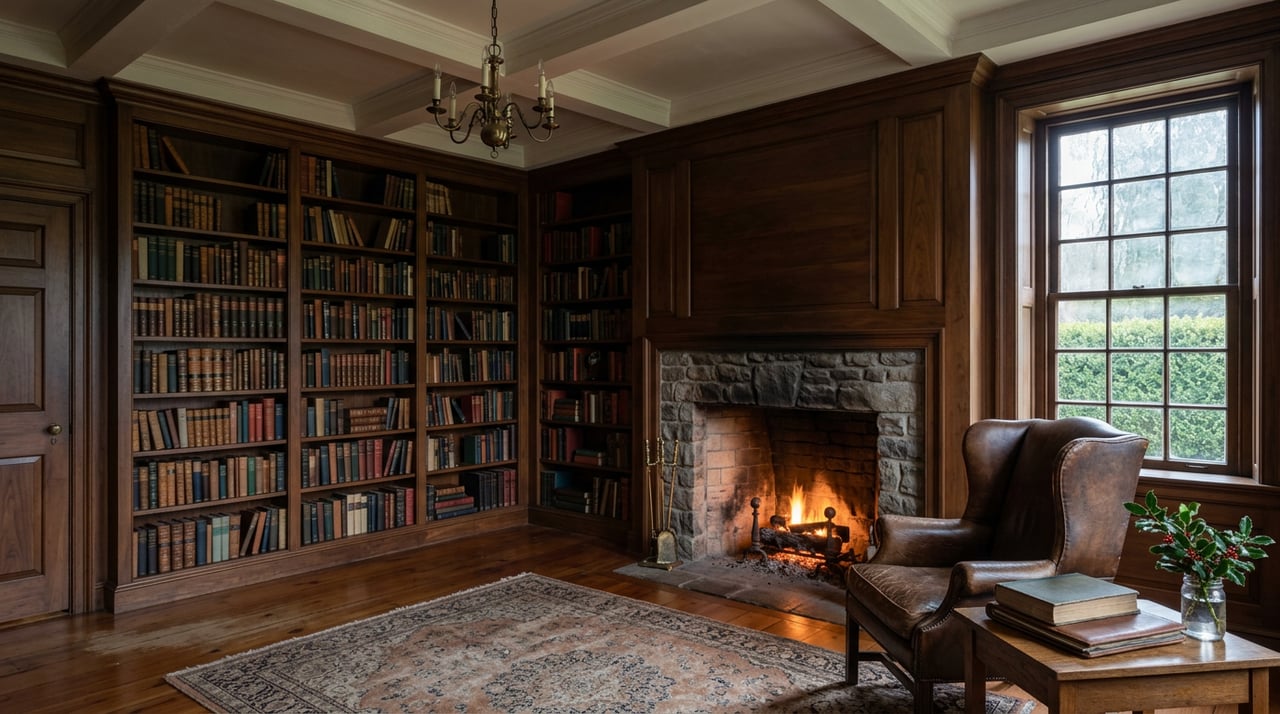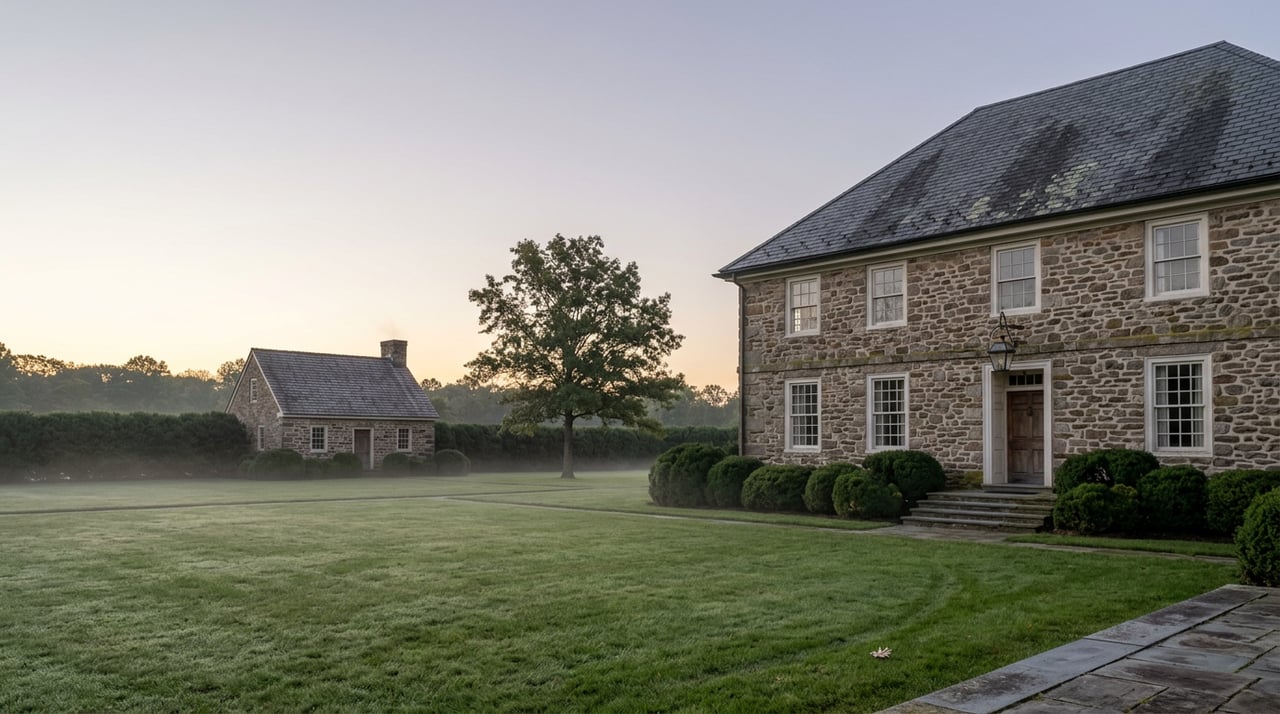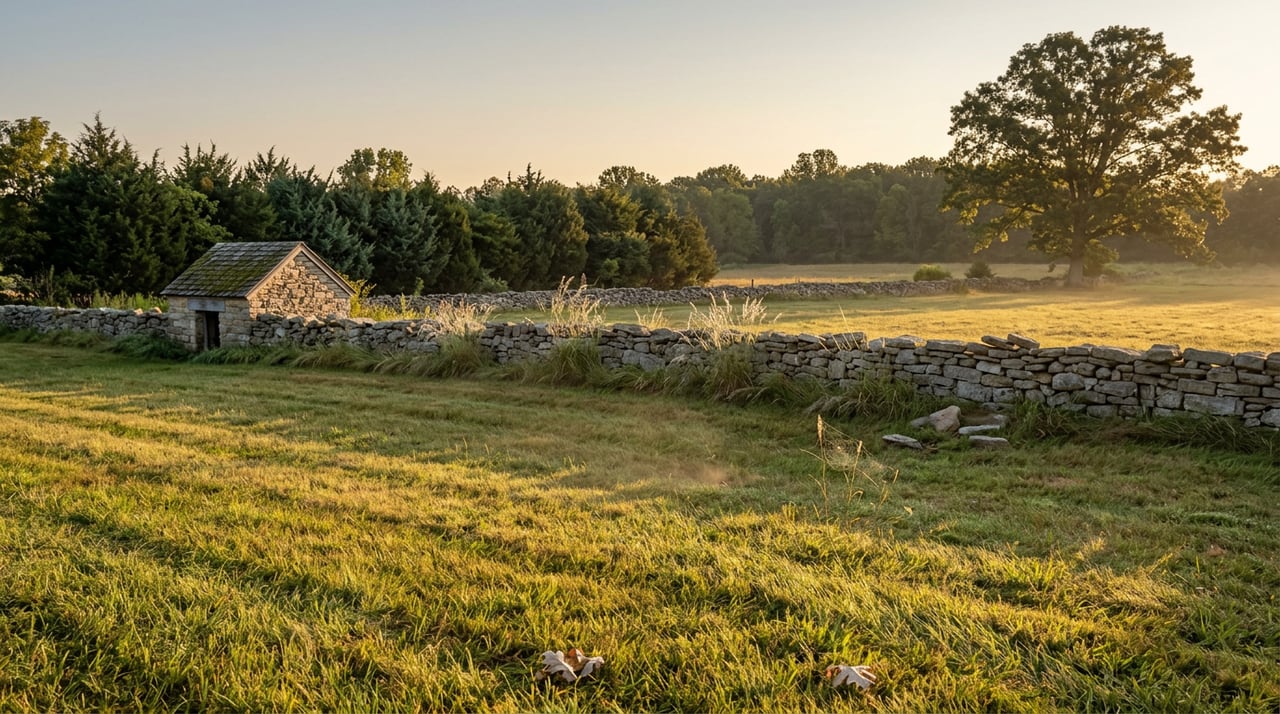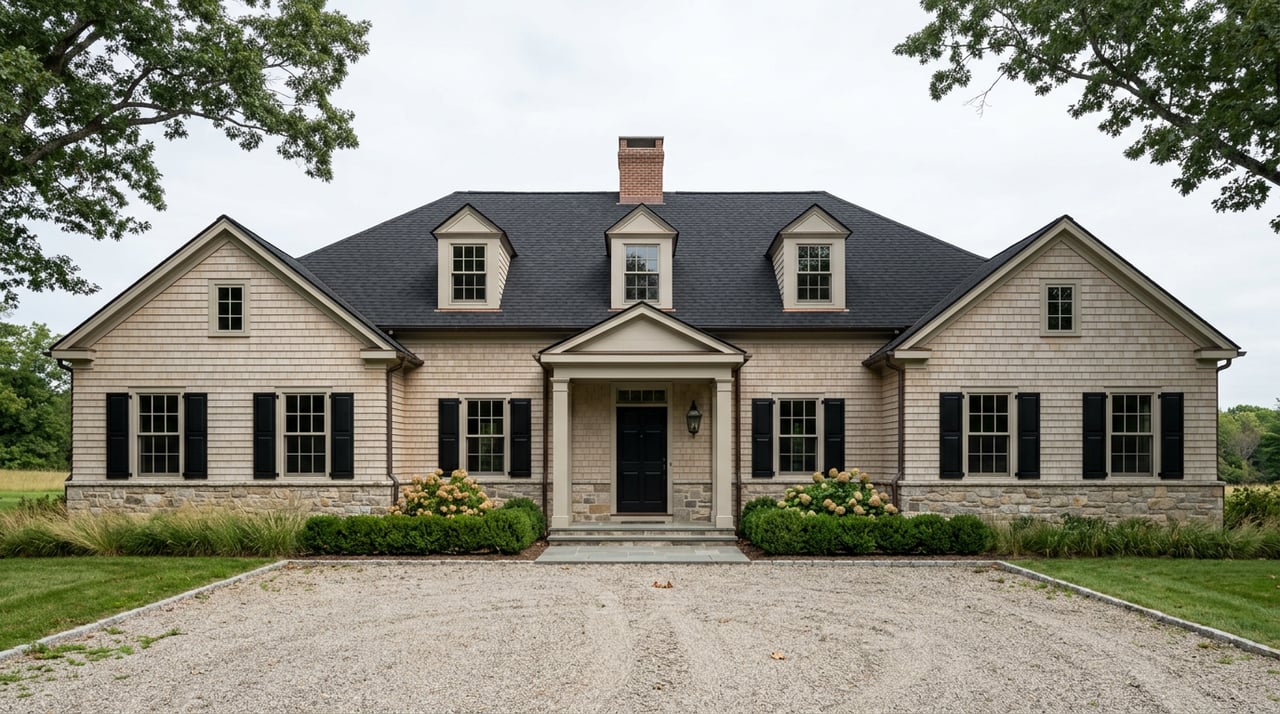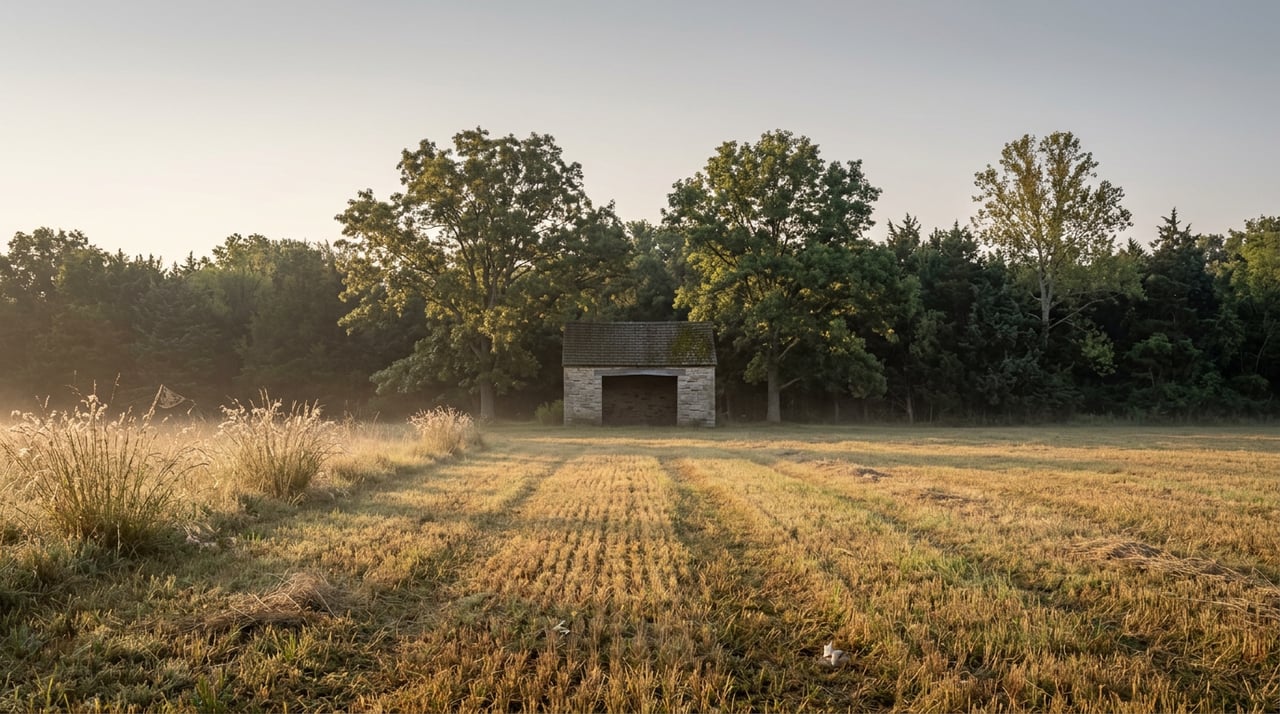
Two Hunt Country parcels can sit within a mile of each other, list at the same price per acre, and carry completely different financial futures. One might owe five years of deferred property tax the moment its next owner puts up a second barn. The other might carry a permanent restriction on where a house can ever stand, and be worth less on paper because of it, while never facing a tax bill for that restriction at all. Nothing on the listing sheet tells you which is which.
In Fauquier County, where Upperville sits along U.S. Route 50 near the Loudoun County line, a large share of the land that gives this stretch of the Piedmont its open, pastoral character is either enrolled in a use-value tax program, encumbered by a conservation easement, or both. Neither shows up in the square footage or the acreage total. Both change what a buyer is actually paying for and what it will cost to hold.
This is not a caution against buying land here. It is the reason land here looks the way it does. Understanding the mechanism turns a surprise into a plan.
Two Fields, Two Very Different Ledgers
Fauquier County allows agricultural, horticultural, forest, and open-space land to be assessed at its use value rather than its fair market value, provided the parcel meets a minimum acreage and the owner files and maintains the enrollment. Use value is based on what the land can produce, not what a buyer would pay for it on the open market, so a working hayfield or a managed woodlot is taxed on productive capacity rather than development potential.
That gap between use value and fair market value is where the real story lives.
| Enrolled in Land Use | Assessed at Fair Market Value | |
|---|---|---|
| Tax basis | Productive capacity of the land | What a willing buyer would pay |
| Typical annual tax bill | Lower, sometimes substantially | Reflects full market value |
| Filing requirement | Revalidation must be filed every year | None |
| If use changes, land is rezoned, or a lot is split off | Rollback tax becomes due | No change |
| Who owes it | The owner at the time of the triggering event | Not applicable |
Fauquier's own Commissioner of the Revenue office confirms that revalidations must be filed annually to stay in the program, and that missing that filing, changing the qualifying use, requesting rezoning, or splitting off a lot can each trigger a reassessment back to fair market value.
The 2026 Reassessment Just Widened That Gap
Fauquier conducts a countywide general reassessment every four years. The most recent one became effective January 1, 2026, with the next scheduled for January 1, 2028. Between reassessment cycles, a parcel's fair market value on the county's books stays fixed even as the actual market moves, while its use value, if enrolled, is recalculated on its own separate schedule.
That matters for one reason. Rollback tax is calculated as the difference between land-use value and fair-market value, so any parcel where fair market value has climbed since it was last set will carry a wider gap than it did four years ago. A buyer evaluating enrolled land in 2026 is looking at numbers that just reset. Whether that gap has grown, shrunk, or held steady depends entirely on the specific parcel, which is exactly why the number is worth pulling before an offer, not after closing.
The Bill That Shows Up After You've Already Signed
Rollback tax is not a penalty for doing something wrong. It is the county collecting what it deferred, plus interest, once the land stops qualifying for the program that deferred it.
The rollback covers the current tax year plus the five most recent tax years, with 10 percent simple interest added to the deferred amount each year it was outstanding.
That formula comes directly from Fauquier's own guidance, and it applies whether the triggering event is a change in farming use, a rezoning application, or splitting a lot off the parent tract. The obligation attaches to whoever owns the property at the moment the qualifying use ends, which means a buyer who purchases enrolled land and later builds beyond what the use classification allows can be the one who owes six years of back taxes on land they only recently closed on.
This is not a reason to avoid enrolled land. Most working farms and pastures in this part of the county are enrolled precisely because it keeps carrying costs manageable for an owner who intends to keep farming or keep the land open. It is a reason to know the enrollment status and the property's recent history of splits or use changes before assuming the current tax bill will be the future tax bill.
What a Conservation Easement Actually Changes
A conservation easement is a different instrument entirely. Where land-use enrollment is a tax election that can be added, dropped, or lost, an easement is a permanent transfer of development rights, recorded against the deed and binding on every future owner.
Three organizations hold most of the easements around Upperville. The Piedmont Environmental Council, headquartered in Warrenton and founded in 1972, works directly with Piedmont landowners on easement terms. The Virginia Outdoors Foundation, created by the General Assembly in 1966, now holds easements protecting more than 850,000 acres across the Commonwealth. The Land Trust of Virginia, founded in 1992, holds 44 easements in Fauquier County alone, totaling just over 5,000 acres as of 2021. Fauquier County also runs its own Purchase of Development Rights program, established in 2002, which lets an owner of 50 or more acres sell the development rights outright to the county for cash while continuing to farm the land under an easement.
Once an easement is recorded, it typically lowers the fair market value of the land, since a buyer can no longer subdivide or build out the property the way an unrestricted parcel could. But Virginia law also provides that land under a perpetual conservation easement that already qualified for use-value assessment continues to qualify for as long as the county maintains a land-use program, even if active farming later slows or stops. The restriction is permanent. The favorable tax treatment, in many cases, becomes permanent too.
One nuance catches buyers off guard: if you purchase land that already carries an easement, the state income tax credit associated with donating that easement went to the original owner who made the gift. It does not transfer to you. What you inherit is the restriction itself, and often the continuing use-value tax status, but not the credit that paid for it.
Why This Explains the View Out Your Car Window
The clearest large-scale example near Upperville is Oak Spring Farm, the roughly 4,000-acre estate assembled by Paul and Rachel "Bunny" Mellon beginning in the 1930s, widely cited as one of the region's most significant early private land conservation efforts. It is not an outlier. It is the pattern at scale.
In a report released in April 2026, the Piedmont Environmental Council noted that landowners across its nine-county Piedmont region, which includes Fauquier, conserved more than 4,178 acres through new easements in 2025 alone, pushing total protected land past 28 percent of the entire region. That figure means that on any given Upperville property search, a meaningful share of the open pasture and tree line bordering a listing is very likely permanently protected, regardless of who eventually buys the adjacent parcel.
That is worth sitting with. A buyer is not only pricing the acres inside the fence line. They are, in effect, also pricing the near-certainty that a wide margin of the surrounding land will never be subdivided, developed, or built out, because it already carries the same kind of restriction described above.
Questions to Ask Before You Write an Offer
- Is this specific parcel currently enrolled in Fauquier's land-use program, and has the annual revalidation been filed on schedule?
- Is there a recorded conservation easement on the property, and if so, which organization holds it: the Piedmont Environmental Council, the Virginia Outdoors Foundation, the Land Trust of Virginia, or the county's Purchase of Development Rights program?
- Has any portion of this tract been split off in recent years? A split-off can trigger rollback on the piece that no longer meets the minimum acreage, even if the remainder stays enrolled.
- If you plan to add a barn, guest house, or riding arena, does the recorded easement's building envelope actually allow it, or would that construction trigger a use change you haven't priced?
- When comparing two similarly priced parcels, which one is carrying deferred tax exposure that could come due under new ownership, and which one already settled that question permanently through an easement?
A Few Direct Questions
If I buy land already enrolled in the land-use program, do I inherit rollback risk? Yes, if a future action of yours, such as a disqualifying change in use, a rezoning request, or a subdivision, ends the qualifying use. Virginia law assesses the rollback to the owner at the time that triggering event occurs, which can be you.
Does an easement mean lower property taxes forever? Not automatically. It depends on whether the parcel also qualifies for use-value assessment, and Virginia law allows that qualification to continue indefinitely once established, as long as the county keeps its land-use program in place.
Can I still build a second home on land under a conservation easement? It depends entirely on the terms of that specific easement. Some allow a limited number of dwellings under defined size limits. Others do not. The only way to know is to read the recorded document itself, not a summary of it.
Where This Leaves You
None of this is a reason to hesitate on Hunt Country land. It is the reason so much of it still looks like Hunt Country. The acreage total and the price per acre are the starting point of a conversation, not the end of one. The real terms are in the county's land records and in the easement documents themselves, and reading them before an offer is the difference between owning what you think you bought and discovering the rest of it later.
Brett Molenaar has spent years working through exactly this layer of diligence with buyers and sellers of farms, acreage, and legacy estates across Middleburg and Northern Virginia, from confirming land-use enrollment to reading easement terms line by line before a contract is signed. If you are comparing parcels in Upperville and want to understand what you are actually buying beneath the acreage number, Let's Connect.