Buyers touring new construction in Middleburg tend to assume they've stepped outside the reach of the historic district. The house didn't exist ten years ago. The street it sits on is new too. Surely a builder putting up a brand new home in a brand new subdivision answers to a building inspector, not a preservation committee.
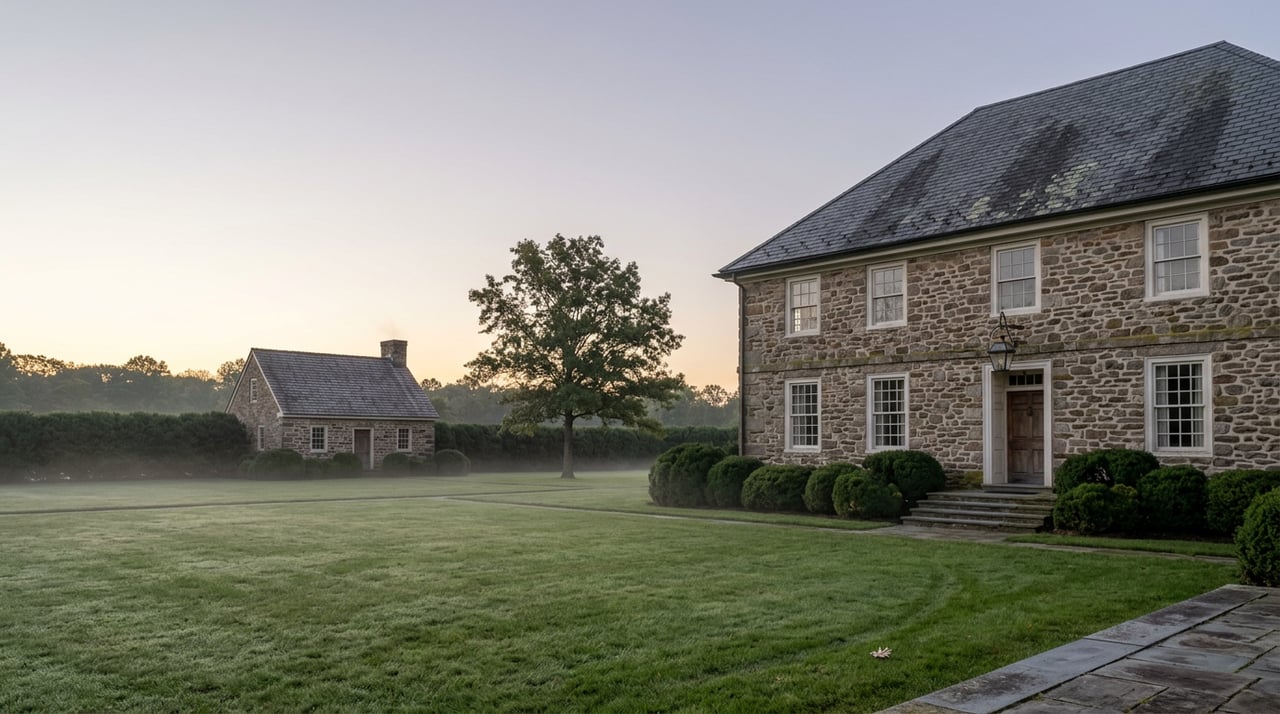
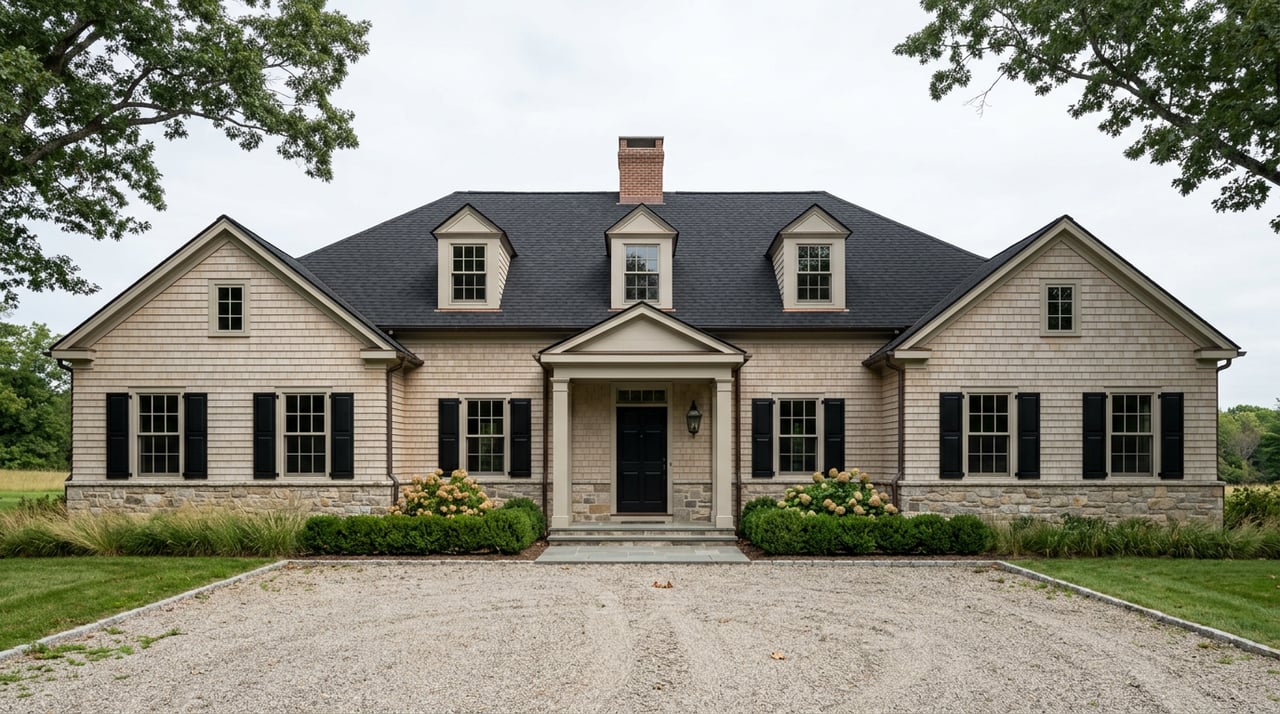
That assumption is wrong, and the town's own record shows exactly why. In 2025, the Middleburg Historic District Review Committee reviewed and approved a new single-family house in the stables section of the Middleburg Residences subdivision. The committee didn't just glance at the plans. It specified the siding as cedar shake, locked the paint into the Revere Pewter color family, approved black roof accents, and sent the design back once to remove a baseboard detail on the rear elevation so the shingles would run cleanly to the water table. The committee's chair, Klynes, opened the item and had staff walk the board through the application before the vote. This was a new build in every sense, and it still needed the same sign-off a centuries-old storefront on Washington Street would need.
That's the thing worth understanding before you write an offer on anything inside Middleburg's historic district boundary, whether the house has stood for two hundred years or two months. The committee doesn't distinguish between old fabric and new construction. It distinguishes between what's visible from a public street and what isn't.
What Actually Requires a Certificate of Appropriateness
The town's rule is direct: no exterior change visible from a public street can proceed on a historic district property until the Historic District Review Committee has issued a Certificate of Appropriateness, or COA. The list of what counts as a change is broader than most buyers expect. It includes demolishing any part of a structure, building additions, replacing roofing or siding, altering or replacing doors and windows, and changing exterior paint colors. A new porch rail, a different shade of trim, a rebuilt chimney facing the road all fall under the same review the committee used to approve the cedar shake and Revere Pewter palette in the stables section.
The committee reviews every application against the town's adopted Historic District Design Guidelines, and applicants are expected to study those guidelines closely before submitting rather than after a rejection.
The Committee's Recent Docket
The range of what actually crosses this committee's table over a single year is worth seeing in one place, because it explains why the review reaches so much further than most buyers picture.
| Case | When | Location | What It Covered |
|---|---|---|---|
| COA 25-04 | 2025 | Stables section, Middleburg Residences | New single-family "hunt box" home: cedar shake siding, Revere Pewter paint family, black roof accents |
| COA-RS 25-01 | April 2025 | 1 Foxtrot Knoll Lane, Lot 38, Middleburg Residences | Design submission for a new single-family home: house narrative, zoning plat, elevation set, and stables-section color map |
| COA 25-08 | April 2025 | 200 W Washington St | Exterior changes requested for Diamondback Hospitality |
| COA 25-09 | April 2025 | 204 E Washington St | Demolition and rebuild of the northwest addition at The Boyd Bed & Breakfast |
| COA 25-36 | January 2026 | 200 W Washington St | Projecting sign requested for the Vintage Equestrian Club |
| COA 25-37 | January 2026 | 115-117 W Washington St | Exterior alterations and a rear addition at the former Fun Shop space |
Six cases, six different kinds of property: two separate new-construction lots in the same subdivision, a hospitality business, a working bed and breakfast, a retail sign, and a mixed-use commercial building getting a rear addition. None of them are museum pieces. All of them needed the same committee's approval before a contractor could touch the exterior. Worth noticing too: 200 W Washington Street shows up twice, under two different businesses nine months apart, which is its own small lesson. The address doesn't get a standing approval. Whoever occupies it next files again.
Why New Construction Doesn't Get a Pass
The stables section is the clearest proof that the district's authority isn't really about age. It's about the boundary line. Middleburg Residences sits inside that line, and every new house built there, including the one at 1 Foxtrot Knoll Lane on Lot 38, goes through the same committee that reviews additions to eighteenth-century stone buildings on Washington Street. The Foxtrot Knoll Lane submission alone included a full house narrative, a zoning plat, a main level floor plan, an elevation set, and a color map specific to the stables section, the same package of documents a builder restoring a Federal-era storefront downtown would be expected to produce.
For a buyer, this cuts both ways. On one hand, it means the exterior palette on a new-construction lot has already been vetted, so you're not buying a blank canvas where a future neighbor could put up something jarring next door. On the other hand, it means your own plans for that house, a different roof material down the road, a repainted trim color, a rebuilt porch, go through the same review the builder already went through once. A committee's approval of a house as submitted doesn't pre-clear whatever a future owner might want to change.
The Clock Nobody Reads the Fine Print On
The committee doesn't meet on demand. Under the town's zoning ordinance, it's required to meet at least once a month, or often enough to keep applications moving without unreasonable delay, and applications are due fourteen days ahead of the next scheduled meeting. Special meetings can be called with as little as twenty-four hours notice to committee members, but that's the exception built for genuine urgency, not the standard path.
For a buyer under contract with renovation plans already in mind, that fourteen-day window matters more than it sounds like it should. If your COA application misses the cutoff for this month's agenda, the earliest it gets heard is next month's meeting, and any construction schedule built around a faster timeline needs to account for that from the start. Meetings are open to the public, and the town makes agendas available in advance when feasible, which means a buyer working with a real estate attorney or agent can track exactly where a pending application for a specific address stands before closing rather than after.
What This Means at the Closing Table
For a resale property already inside the historic district, the practical question isn't whether the committee has authority. It's whether any exterior work you're planning after closing, a new roof, replacement windows, a repainted facade, will need its own COA regardless of what the seller has already done to the property. Prior approvals cover the work they were granted for. They don't transfer forward to cover whatever the next owner has in mind.
For new construction inside district boundaries, the stables-section cases are the model to understand before you fall in love with a lot. The exterior materials and colors on file with the town aren't a suggestion the builder happened to choose. They're the version the committee actually approved, down to the roofline detail. If you're picturing a different roof color or a different siding material once you own the house, that picture goes back through the same process that produced the one you're looking at now.
None of this should read as a warning against buying in the historic district. Middleburg's character exists because this process has run for decades, case by case, storefront by storefront, and now lot by lot in its newest section. Buyers who understand how the committee actually works, rather than assuming it only applies to old buildings, are the ones who close without surprises and renovate without delays.
A Few Questions Worth Asking Directly
Does a COA apply if the work isn't visible from the street? The rule as written applies to changes visible from a public street. Work confined to a rear elevation or interior that can't be seen from the road sits outside what triggers committee review, though the specifics of any given property line of sight are worth confirming directly with the town's planning staff rather than assumed.
Does buying new construction in Middleburg Residences mean avoiding the historic district process? No. Both the stables-section house approved under COA 25-04 in 2025 and the Foxtrot Knoll Lane submission on Lot 38 went through the same committee as any other exterior change in town.
How far in advance should a COA application go in before a planned renovation? At minimum, fourteen days before the next scheduled meeting, and the committee meets monthly at minimum. Anyone on a tight renovation timeline should build that cadence into their planning rather than discovering it after signing a contractor's agreement.
If you're weighing a purchase inside Middleburg's historic district, whether it's a stone house on Washington Street or a new lot in the stables section, the exterior details matter as much as the floor plan. Brett Molenaar has spent years working through exactly this kind of due diligence for buyers and sellers across Middleburg and Northern Virginia. Let's Connect before you write the offer, not after.